Research papers on restoration ecology
Liana cutting accelerates the structural recovery of once-logged tropical forests at a fraction of the cost of tree planting
Toby Jackson et al.
Current Biology, 2026
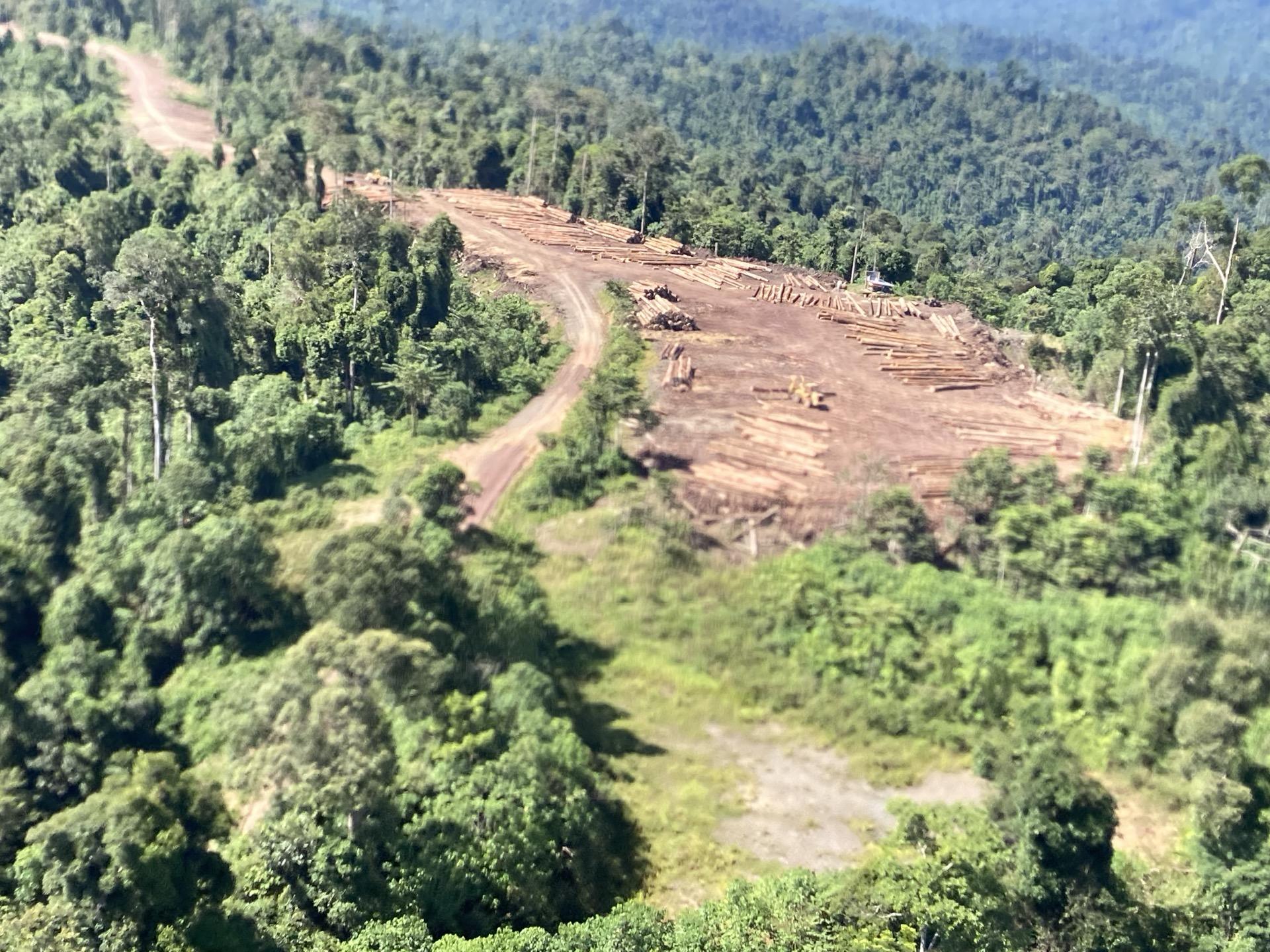
Repeated airborne LiDAR at the Sabah Biodiversity Experiment in Borneo showed that liana cutting sequestered carbon at roughly US$2 per tonne of CO₂ versus US$58 for enrichment planting. The treatment accelerated canopy recovery three times faster than enrichment planting and reduced tree mortality by around 50%.
Read more
Active restoration accelerates the carbon recovery of human-modified tropical forests
Christopher Philipson et al.
Science, 2020
Two decades of permanent-plot data combined with airborne LiDAR biomass maps in Sabah, Malaysian Borneo showed that active restoration accelerated carbon recovery by around 50% compared with natural regeneration. The study provides a rigorous empirical benchmark for quantifying the additional carbon gains delivered by restoration interventions in logged tropical forests.
Read more
The road to recovery: a synthesis of outcomes from ecosystem restoration in tropical and sub-tropical Asian forests
Lindsay Banin et al.
Philosophical Transactions of the Royal Society B, 2023
Synthesis of ecosystem restoration outcomes across tropical and sub-tropical Asia, evaluating tree mortality and growth at 176 sites and assessing structural and biodiversity recovery in actively restored versus naturally regenerating forest plots. Provides a rigorous empirical foundation for setting realistic expectations of restoration-based carbon and biodiversity outcomes in the Asian tropics.
Read more
Biodiversity consequences of long-term active forest restoration in selectively-logged tropical rainforests
Nadine Keller et al.
Forest Ecology and Management, 2023
Long-term active restoration in logged tropical forests reshapes biodiversity alongside structural recovery.
View on doi.org
Three decades of post-logging tree community recovery in naturally regenerating and actively restored dipterocarp forest in Borneo
Robin Hayward et al.
Forest Ecology and Management, 2021
Thirty years of plot data from Borneo on dipterocarp community recovery under natural regeneration and active restoration.
View on doi.org
Positive effects of liana cutting on seedlings are reduced during El Niño-induced drought
Michael O'Brien et al.
Journal of Applied Ecology, 2019
The benefit of liana cutting on seedlings is reduced during El Niño drought, showing climate stress can erode restoration gains.
View on doi.org
The Sabah Biodiversity Experiment: a long-term test of the role of tree diversity in restoring tropical forest structure and functioning
Andy Hector et al.
Philosophical Transactions of the Royal Society B, 2011
The seminal Sabah Biodiversity Experiment paper, designed to test how tree diversity affects restored tropical forest structure and function.
View on doi.org
Want more on restoration ecology?
Read our take
Liana cutting, designed experiments, and carbon baselines
by Christopher D. Philipson
Liana cutting accelerates the recovery of logged tropical forest three times faster than tree planting, at one tenth of the cost. The Sabah Biodiversity Experiment shows why designed experiments matter for forest carbon baselines.
Read article
Stay in the loop
Stay up to date with developments in independent reference area selection and carbon market baselining.